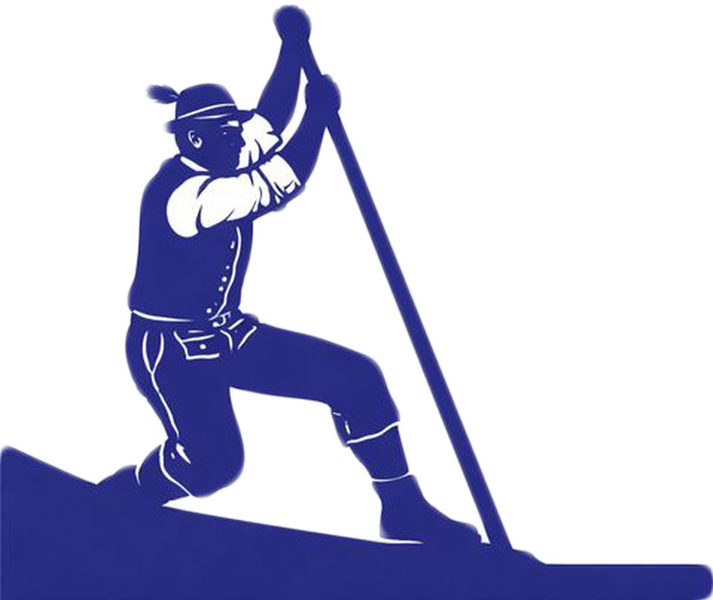
Log rafting has a long and significant history in Upper Franconia, dating back to the Middle Ages. In the Franconian Forest, one of the main rafting regions in Bavaria, this practice has been documented since the late 12th century. The oldest written records of log rafting in the Franconian Forest date from 1386.
The rafters used the waterways, especially the Haßlach, Kronach, and Rodach rivers, to transport timber via the Main and Rhine rivers to the Netherlands. This activity significantly shaped not only the landscape and settlements but also the people of the region.
Commercial log rafting in the Franconian Forest ended at the beginning of the 20th century. Today, the tradition is kept alive by rafting associations, museums, and tourist raft trips. In places like Unterrodach, Wallenfels, and Neuses, there are still opportunities to experience this historical practice and learn more about it.
Log rafting left behind a unique cultural landscape with numerous relics along the former rafting routes, some of which are still visible today. These remnants bear witness to the economic and cultural significance of log rafting for Upper Franconia over many centuries.
Keeping this tradition alive is the task of the Unterrodach Rafting Association, under the auspices of the municipality of Marktrodach, which operates the Unterrodach Rafting Museum with its affiliated archive and specialized library on log rafting. This ensures the preservation and maintenance of the "intangible cultural heritage of log rafting," allowing it to be preserved and experienced by future generations.